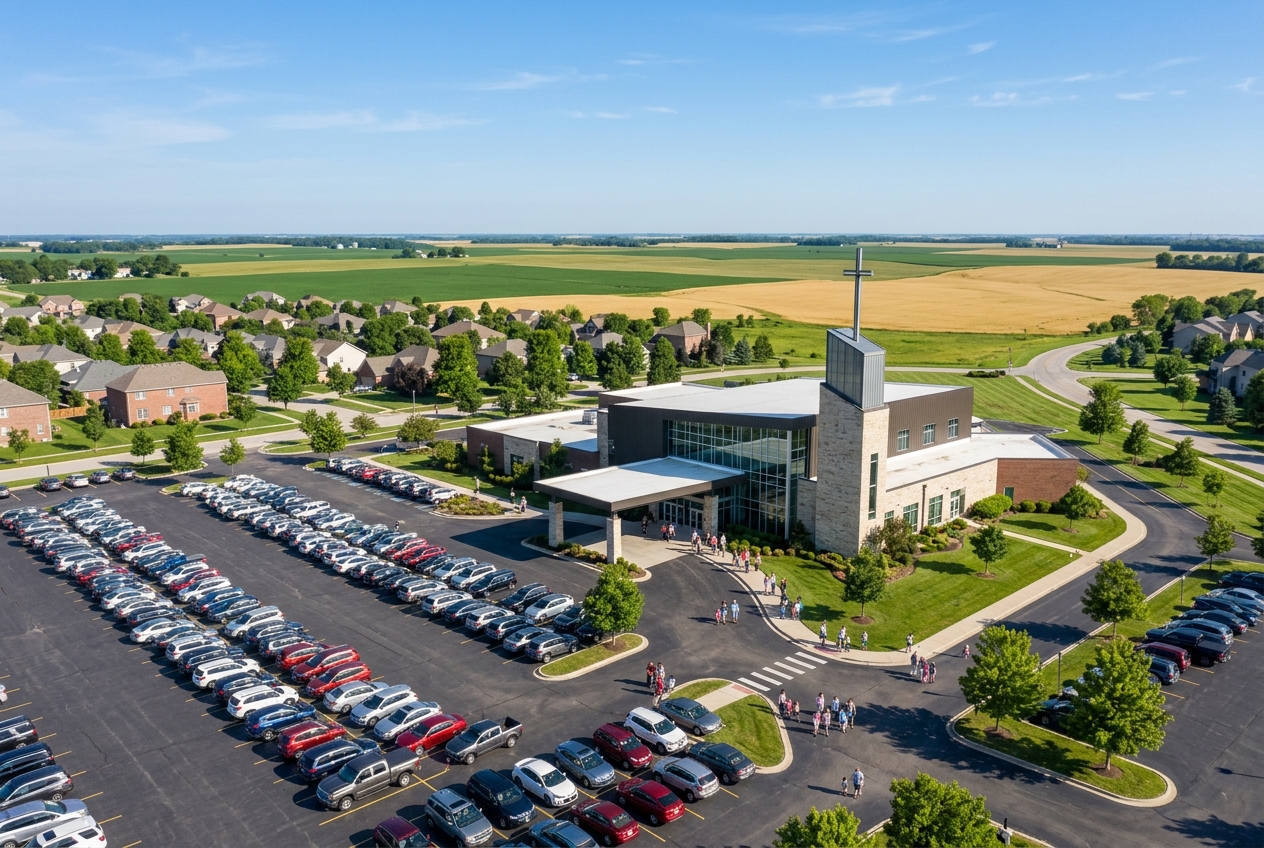
The Outreach 100 Fastest-Growing Churches in America list for 2026 highlights 100 congregations whose in-person attendance grew significantly over the past year. Together they welcome about 548,000 people each weekend, including more than 71,000 who weren’t there a year ago. The average church on the list added 715 people (the median church added 495), and growth rates averaged 18.7%.
This is our second year looking closely at this list, so for the first time we can see what changed. Half of last year’s churches returned, 18 churches made the Fastest-Growing list for the first time ever, and one pattern stood out from the rest: the youngest churches on the list grew more than twice as fast as everyone else.
Disclaimer & Methodology
Outreach and Lifeway Research compile the list each year from a voluntary, self-reported survey. Churches report their average in-person weekend attendance for February and March, compared with the same months a year earlier. Final rankings average numerical gain and percentage gain. Not every church in the United States takes part, so a church leaving the list doesn’t mean it stopped growing. It may simply not have responded this year.
Church management software (ChMS) data come from our own research, including church websites and other public information. Churches change systems regularly, so treat these numbers as a snapshot rather than a permanent record.
Defining Church Size Terms
Every church on this list draws more than 1,000 people on an average weekend, so all of them are large by most standards. To show differences within the group, we use the same size ranges as last year:
| Size | Average Weekly Attendance | 2025 Churches | 2026 Churches |
|---|---|---|---|
| Small | 1,000–3,000 | 38 | 46 |
| Medium | 3,000–7,000 | 39 | 31 |
| Large | 7,000–15,000 | 15 | 16 |
| Mega | Over 15,000 | 8 | 7 |
This year’s list leans smaller, and that’s worth noticing. Growth rates are highest among churches of 1,000 to 3,000 and drop noticeably once a church passes about 7,000. That’s common in any growing organization: the larger a church gets, the more of its energy goes into coordinating staff, campuses, and ministries, and each new person is a smaller share of the whole. Large churches still add the most people. The work simply shifts from reaching people to keeping them connected.
Where Church Growth Is Happening
Fast-growing churches are less concentrated in a handful of Sun Belt states than they were a year ago. Florida still leads and Texas remains near the top, but both have far fewer churches than last year, while the Midwest became a real center of growth, especially across Ohio, Indiana, and Michigan. Because the survey is voluntary, one year’s shift shouldn’t be read as a decline anywhere. It’s still a healthy reminder that thriving churches aren’t tied to one region or one kind of community.
The Northeast stands out in a different way. It has only a few churches on the list, but they’re growing quickly, and they’re the youngest churches of any region. In parts of the country with fewer established large churches, a newer church that connects with its community has a lot of room to grow.
Denominational Trends
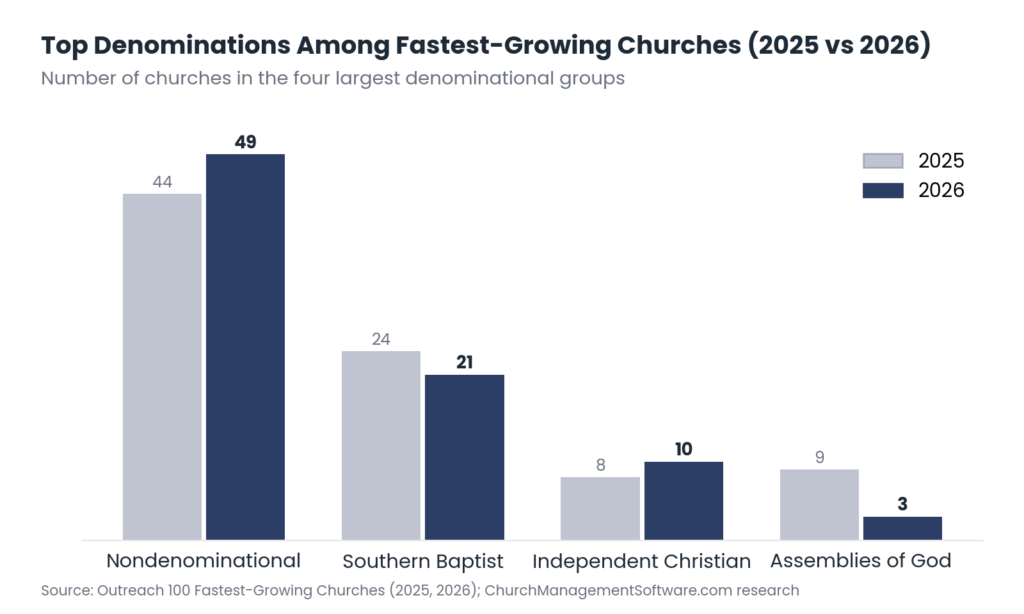
The nondenominational lead and the founding-year trend in the next section are really the same story. Nondenominational churches on this list are much younger than denominational ones, and most of the churches founded since 2010 are nondenominational. When nondenominational churches gain ground, much of what we’re seeing is the strength of recently planted churches.
Denominational churches tell a steadier story. Southern Baptist churches remain the second-largest group, and most are long-established congregations growing at a solid, consistent pace. Smaller shifts, like the drop in Assemblies of God churches, are hard to read in a single year because they depend on which churches responded to the survey.
Younger Churches Are Growing Fastest
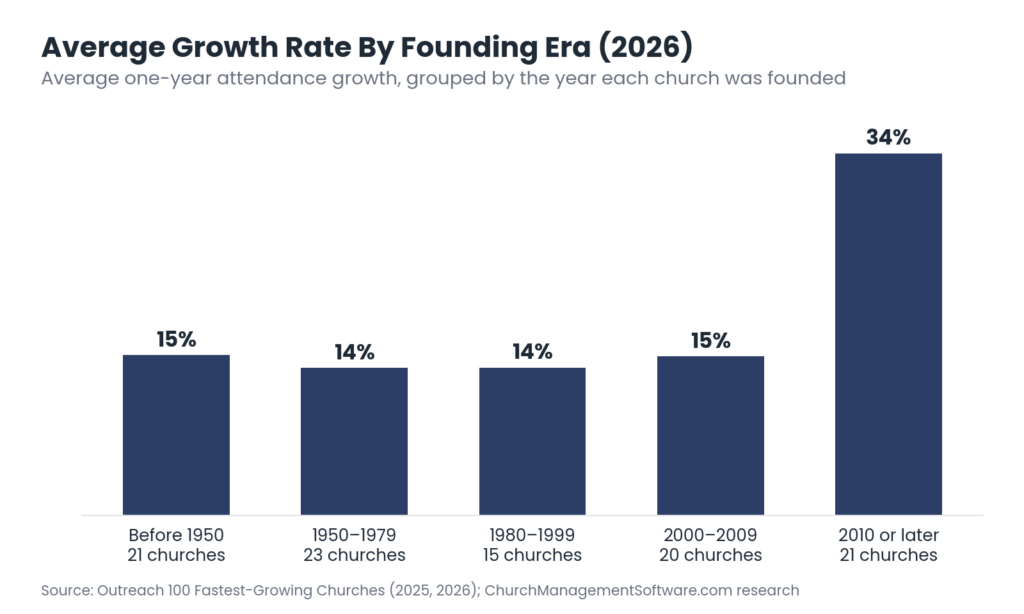
This year we added each church’s founding year from its Outreach profile, and it turned out to be one of the clearest patterns in the data.
Churches founded since 2010 grew at more than twice the rate of every older group. Part of that is math: a younger church usually grows from a smaller base, so each new person moves its percentage more. It also reflects what a church’s first decade often looks like, when reaching new people and launching new ministries sit at the center of almost everything the staff does.
The older end of the chart matters too. Churches founded generations ago, including one that dates to 1834, are still growing. Age doesn’t cap a church’s growth. What changes is the pace, as established churches balance reaching new people with caring for the people they already have.
For newer churches, there’s a practical takeaway. The systems and habits a church sets up in its early years will likely carry it through its fastest season of growth, so it pays to choose them with the next five years in mind.
Top Church Management Systems
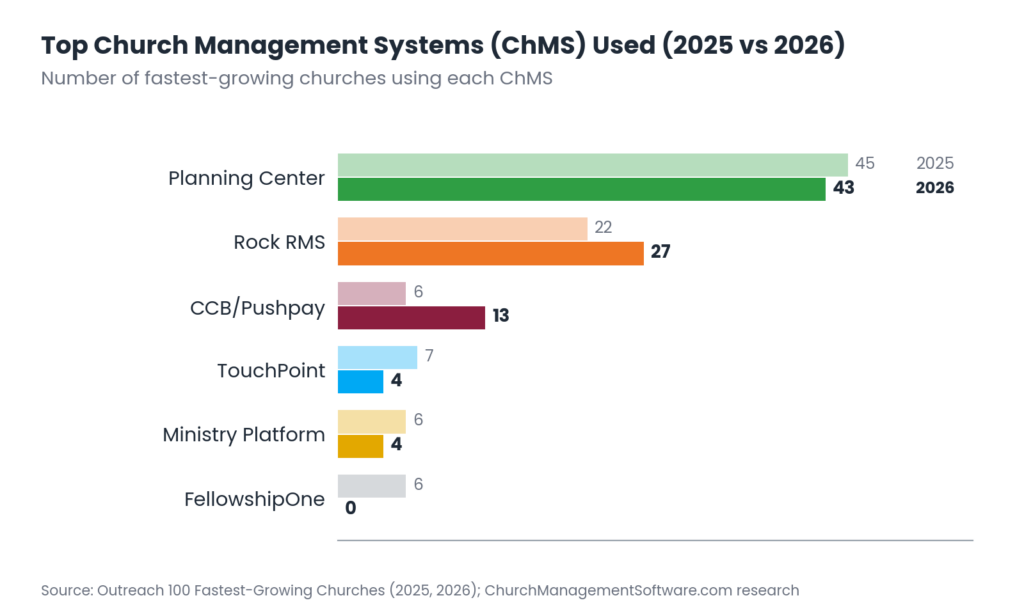
Planning Center remains the most common ChMS on the list. Rock RMS and CCB/Pushpay both increased churches represented from last year. TouchPoint and Ministry Platform serve four churches each. Six other ChMSs serve three or fewer churches on the list. FellowshipOne, which served six churches last year, doesn’t appear on this year’s list at all.
One caution before reading too much into these shifts: half the list is new this year. Most of the change comes from which churches made the list, not from churches switching systems.
ChMS By Church Size
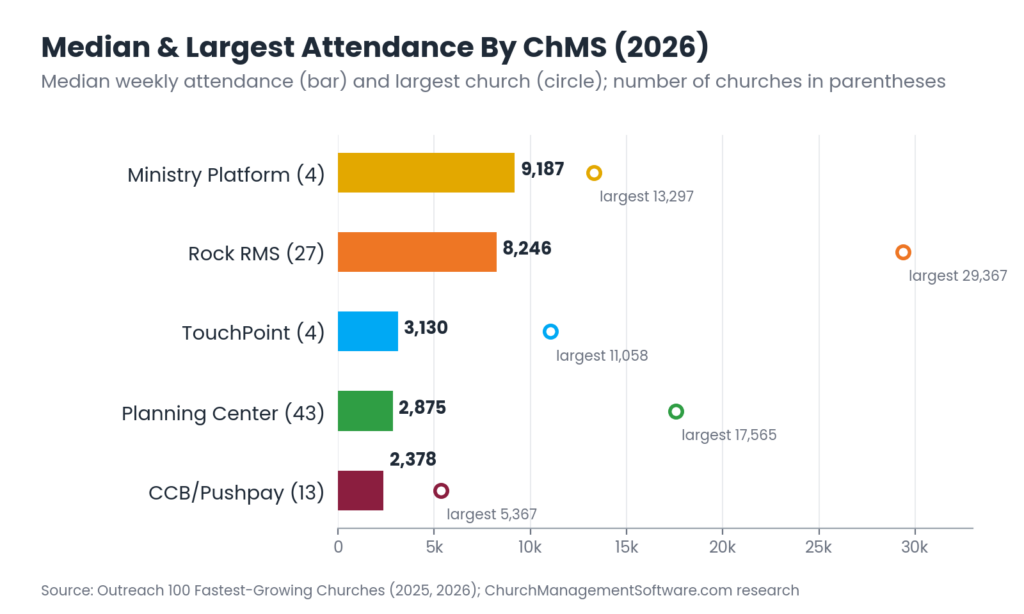
Church size and system choice line up closely. Rock RMS and Ministry Platform serve the largest churches on the list, while Planning Center and CCB/Pushpay serve more of the churches at the smaller end, with some notable exceptions. As churches grow, their needs get more specialized. The largest churches on this list operate a median of 12 locations, and they tend to look for systems they can configure deeply around their own ministry processes.
Every system here also serves churches that aren’t on this list. For a closer look at platforms built for customization for large churches, see our roundup of the top customizable church management systems.
ChMS By Church Age
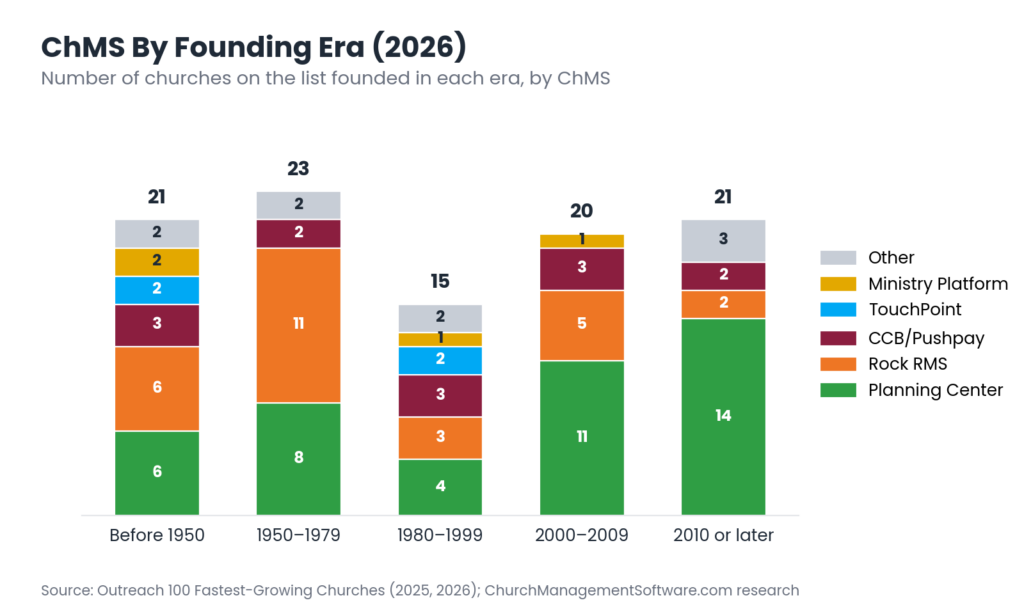
The founding-era chart shows where each system’s churches come from. Planning Center serves most of the churches planted since 2000, which fits its reputation among church planters as an approachable place to start, and many of those churches have kept it as they grew past 1,000 people. Long-established churches are spread across more systems, often after years of building ministry processes around a platform.
Taken together, size and age suggest that a church’s system choice reflects its stage of life more than its growth rate. The more useful question for most churches is which system fits where your church is headed.
A Note On Giving Platforms
Last year’s article listed the most common pairings of church management systems and giving platforms. We left that section out this year. Most church management systems now offer giving built into the platform, so a list of pairings says less than it used to about how churches actually steward generosity. We decided to use the space for new analysis, including founding years and year-over-year changes.
Year Over Year: What Changed Since 2025
| 2025 | 2026 | |
|---|---|---|
| Total weekly attendance | 596,404 | 548,391 |
| New attendees | 77,442 | 71,517 |
| Average growth per church | 782 | 715 |
| Average growth rate | 20.5% | 18.7% |
| States represented | 31 | 34 |
The biggest lesson from comparing two years is how much the list changes. Half of last year’s churches didn’t return, which shows both how hard it is to sustain fast growth and how much the list depends on which churches respond.
The churches that did return tend to be larger, and many have a long track record. Forty churches on this year’s list have made the Fastest-Growing list at least five times. Growth sustained over that many years usually points to more than a breakthrough season. It suggests a culture and a set of practices built to keep welcoming and connecting new people. Some returning churches also climbed sharply, led by Heritage Church in Sterling Heights, Michigan, which rose from 59th to second.
At the same time, 18 churches made the list for the first time ever, and they grew faster than the list as a whole. Breakthrough years are still happening, often at churches few would have predicted a year earlier.
Very few churches change systems in a given year. Among the 50 returning churches, only one switched ChMS, and across the full list we know of at least two switches. That reflects how big a decision a ChMS change is, especially in a season of growth, when staff time and attention are already stretched.
The Legacy Platform Shift: FellowshipOne & CCB
FellowshipOne’s absence from this year’s list is mostly a turnover story, since five of last year’s six FellowshipOne churches didn’t return. But it fits a larger pattern in church software: older platforms are being folded into the larger companies that own them.
CCB is now part of Pushpay, and its story has its own chapter, which we covered in Say Goodbye To Church Community Builder. CCB’s count on the list rose this year, almost entirely because of churches new to the list.
If your church runs a legacy platform, the best time to plan a move is before you need one. Our guide to ChMS data migration timelines walks through what to expect.
Fastest Growing Churches Awards
While every church on this list represents faithful work by pastors, staff, and volunteers; these light-hearted awards celebrate a few standout stories from this year’s data:
-
- Highest Percentage Growth: Way Church in Nashville, Tennessee, more than doubled, growing 108% in one year. Founded in 2023, it’s also the newest church and this is it’s first appearance on the Fastest Growing list
- Most Numerical Growth: The Church of Eleven22 in Jacksonville, Florida, added 7,734 people and ranks first overall. It has appeared on every Fastest-Growing list since 2015.
- On The Map: Four states with no churches on last year’s list are represented this year, each by a church making its first-ever appearance on the Fastest-Growing list:
- Fox River Christian Church in Waukesha, Wisconsin
- Lenexa Baptist Church in Lenexa, Kansas
- Real Life Ministries in Post Falls, Idaho
- The Journey in Newark, Delaware.
- Deepest Roots: Traders Point Christian Church in Indianapolis was founded in 1834, making it the oldest church on the list, and it added 2,034 people this year.
- Smallest Attendance on the List: First Baptist Church Cullman in Cullman, Alabama, averages 1,026 people and grew 13%, a reminder that steady growth counts at every size.
What This Means For Your Church
-
- If you church hopes to grow pasr 7,000, plan ahead. Growth rates slow at that size, often because complexity grows faster than attendance. Reviewing staffing, communication, and systems before you reach that point can make the season smoother.
- Expect multiple locations. Most churches on this list run more than one campus, and the number climbs with size. Campus-level reporting, permissions, and check-in matter long before a church reaches megachurch size.
- Choose tools for the church you’re becoming. The system a young church picks often carries it through its fastest growth.
- Lead the people side of change. If your church is considering a new system, our article on the emotional journey of changing church management systems offers practical help for walking your team through it.
- Keep giving connected. Giving information that flows into your ChMS helps finance and ministry teams work from the same picture.
Fastest Growing Churches Recap
Two years of data point to a few clear trends. Growth is spreading to more regions, younger churches are growing the fastest, and the systems churches use tend to reflect their stage of life: many newer churches start on approachable, all-in-one tools, while the largest churches lean on platforms built for deep customization. Meanwhile, legacy platforms are fading from the list as their parent companies consolidate.
Whatever system your church uses, the goal is the same: helping your team see the people God is bringing through your doors so no one slips through the cracks. If you want to know how well your current system serves your staff, take our free five-minute ChMS assessment and share it with your team.
Take The ChMS Alignment Assessment
Frequently Asked Questions
Who Are The Fastest-Growing Churches In America In 2026?
The Church of Eleven22 (Jacksonville, Florida)
Heritage Church (Sterling Heights, Michigan)
Trace Church (Colorado Springs, Colorado)
Generation Church (Mesa, Arizona)
Elevate Life Church (Wallingford, Connecticut).