Churches serve as gathering places for worship, discipleship, care, and community life. Each week brings a rhythm of services, meetings, classes, celebrations, and outreach efforts that depend on thoughtful planning and well-prepared spaces. When these moments are supported well, ministry flourishes. When they aren’t, friction and fatigue quickly surface.
Behind the scenes, two distinct but closely related disciplines help make this possible: event management and facility stewardship. One focuses on coordinating what is happening now. The other looks ahead, ensuring the spaces that support ministry remain safe, functional, and sustainable for years to come.
Understanding how these two roles differ (and how they work best together) can help churches care more faithfully for both their people and the places where ministry happens.
Clarifying the Roles:
Scheduling, Facilities, & Stewardship
Although they are closely connected, event scheduling, facility management, and stewardship serve different purposes within a church’s operations. Confusion often arises when these roles are treated as interchangeable, even though each requires a distinct mindset and set of responsibilities.
Event scheduling focuses on coordinating specific activities in real time. It involves assigning dates and spaces, aligning people and resources, communicating details, and responding to inevitable last-minute changes. The goal is to ensure that events happen smoothly and that ministries have what they need when they need it. This work is inherently tactical—responsive, detail-oriented, and closely tied to the immediate ministry calendar.
Facility management, by contrast, carries a wider operational scope. It centers on the physical care of buildings and systems: maintenance, safety, compliance, cleanliness, and functionality. Facility managers must think beyond individual events and consider how spaces perform over time. Their work includes planning maintenance cycles, monitoring wear and tear, and ensuring that facilities remain reliable and safe for all who use them.
Stewardship adds an even broader lens. It speaks to responsibility, care, and long-term faithfulness. In the context of church facilities, stewardship asks not only, “Is this working today?” but also, “Will this serve the church well tomorrow?” It emphasizes sustainability, wise use of resources, and intentional decision-making so that physical assets continue to support ministry for years to come.
While distinct, these roles reinforce one another. Well-maintained spaces make event coordination easier and less stressful. Thoughtful stewardship ensures that both event planning and facility use respect the value of what has been entrusted to the church. When these disciplines are understood clearly, churches are better equipped to serve both present needs and future ministry.

Church Event Management:
Executing Ministry In Real Time
Event management in a church context is focused on execution. It’s the work of translating ministry ideas into scheduled, resourced, and coordinated experiences. From weekend services to weddings, classes, and outreach events, this role ensures that people know where to be, spaces are available, and resources are ready at the right time.
Because events happen on fixed dates, event management is inherently tactical. It requires attention to detail, quick decision-making, and the ability to adapt when plans change. A delayed setup, a double-booked room, or a missing resource can ripple outward, affecting volunteers, staff, and attendees alike.
Several core elements shape effective event management:
- Logistics and Coordination: Confirming that rooms, equipment, seating, and technology are prepared and functional for each gathering.
- Communication: Making sure staff, volunteers, and participants receive timely and accurate information before and during events.
- Volunteer Planning: Aligning people with roles, schedules, and expectations so they can serve confidently and effectively.
At its best, event management reduces friction. When the tactical details are handled well, ministry leaders and volunteers are freed to focus on people rather than problems. Events don’t just happen—they happen with clarity, calm, and purpose.
Church Facility Stewardship:
Planning For Long-Term Impact
If event management focuses on what must happen today, facility stewardship asks a longer-term question: How will our spaces support ministry over time? This work is inherently strategic. It looks beyond individual events and considers the ongoing health, capacity, and sustainability of the church’s physical environment.
Facility stewardship includes intentional planning around several long-range concerns:
- Maintenance and Upgrades: Establishing regular maintenance rhythms and anticipating upgrades before systems fail helps prevent disruption and extend the life of facilities.
- Sustainability: Thoughtful approaches to energy use, system efficiency, and resource consumption can reduce strain on both budgets and buildings, allowing churches to steward what they have more responsibly.
- Life-Cycle Planning: Every building system has a lifespan. Planning ahead for repairs and replacements (rather than reacting to emergencies) may be one of the most overlooked yet impactful leadership responsibilities.
- Staffing and Support: Increased facility use brings increased demand. Cleaning, setup, security, repairs, and oversight all require time and people, and those realities must be considered as part of long-term ministry planning.
Strategic facility stewardship is ultimately about foresight. A church would never plan to host frequent gatherings in a home without accounting for cleaning, maintenance, or wear and tear. In the same way, churches that want their facilities to serve vibrant ministry must plan intentionally for the care those spaces require. When stewardship is approached thoughtfully, facilities become reliable partners in ministry rather than sources of constant strain.

Practicing Good Stewardship:
Connecting Church Event And Facility Management
Up to this point, the distinction between event management and facility stewardship has been clear. One is tactical, focused on execution in the moment. The other is strategic, concerned with the long-term health and readiness of the spaces that support ministry. The real challenge for churches emerges when these two realities are not intentionally connected.
As ministry activity increases, churches often discover that complexity doesn’t come from a single event—it comes from patterns. Rooms are used more frequently. Setups become more demanding. Wear and tear accelerates. Volunteers and facility teams feel the strain. At this stage, coordination matters as much as intention.
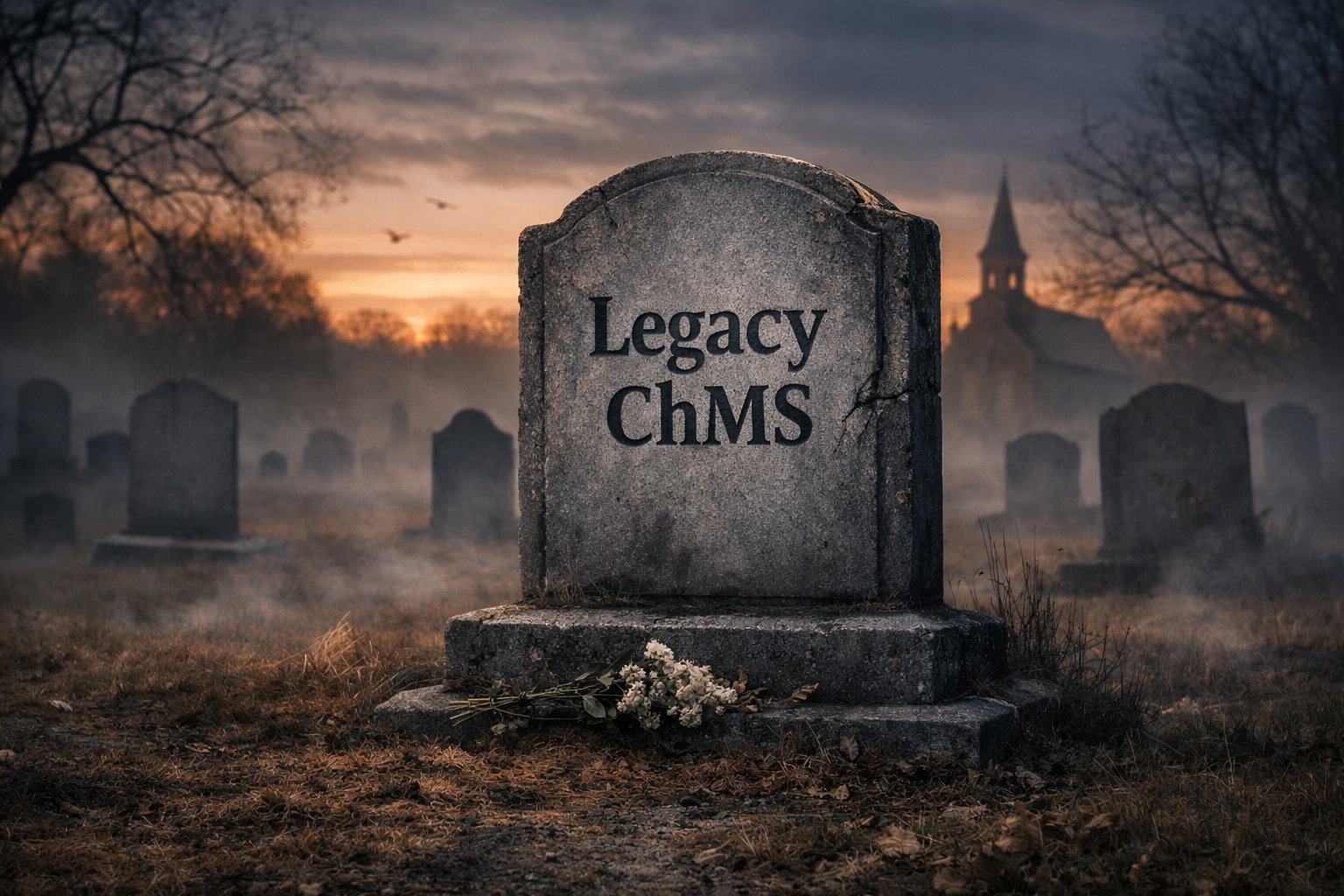
This is where church management systems enter the conversation. There is a wide variety of ChMS platforms available today, each designed to serve churches at different stages and with different needs. Many excel at core functions such as people management, communication, attendance tracking, and event registrations. For a time, these tools are more than sufficient.
However, as facilities are used more intensively and events begin to overlap, churches often realize that managing people and managing places are related (but not identical) challenges. A calendar can tell you what is happening and when, but it rarely provides insight into how events impact the condition, capacity, and sustainability of the spaces being used.
This is where platforms like eSPACE become valuable. Rather than replacing a church’s ChMS, eSPACE is designed to integrate with systems, extending event execution into the realm of facility stewardship. It connects scheduled events with work orders, asset data, maintenance history, and life cycle planning—areas most ChMS platforms were never intended to manage deeply.
When these systems work together, churches gain a clearer picture of reality. Event frequency can inform cleaning schedules and staffing needs. Repeated room usage can surface maintenance priorities. Facility constraints can shape wiser scheduling decisions. Instead of reacting to problems after they occur, teams can plan proactively and steward their spaces with greater intentionality.
The takeaway isn’t that every church needs the same tools. It’s that churches with more than basic operational needs benefit from systems designed to handle that complexity. When event management and facility stewardship are connected (organizationally and technologically) churches are better equipped to support ministry today while caring wisely for the spaces God has entrusted to them for the future.

Conclusion:
It’s About More Than A Calendar
Churches thrive when they give proper attention to both the immediate demands of ministry and the long-term care of the spaces that support it. Event management and facility stewardship serve different purposes, but they are most effective when they are intentionally connected. One ensures ministry moments happen smoothly. The other ensures those moments remain possible year after year.
When churches focus only on scheduling events—without considering how those events impact facilities, staff, volunteers, and systems over time—they often feel the strain in subtle but growing ways. Fatigue increases. Maintenance becomes reactive. Spaces begin to limit ministry instead of supporting it. These challenges aren’t the result of poor intentions; they’re usually the result of incomplete visibility.
The key distinction is this: event scheduling is not the same as facility stewardship. A calendar can tell you what’s happening, but it can’t tell you how those activities affect the health, readiness, and sustainability of your facilities. Churches that recognize this gap are better positioned to care for their people, their volunteers, and the physical spaces God has entrusted to them.
As ministry complexity grows, so does the need for clarity. Churches with more than basic operational needs often find that connecting event management with facility stewardship brings greater alignment, better decision-making, and healthier rhythms. When tactics and strategy work together, churches are freed to focus less on managing chaos and more on advancing their mission.
About the Author

Tim Cool is the President and CEO of Smart Church Solutions and takes great pride in helping churches optimize their facilities.
When he’s not at the helm of his company, he’s dedicated to his family, being a husband to Lisa and a father to 27-year-old triplets. An enthusiast of the outdoors, Tim enjoys the simplicity of hiking in the North Carolina mountains.