
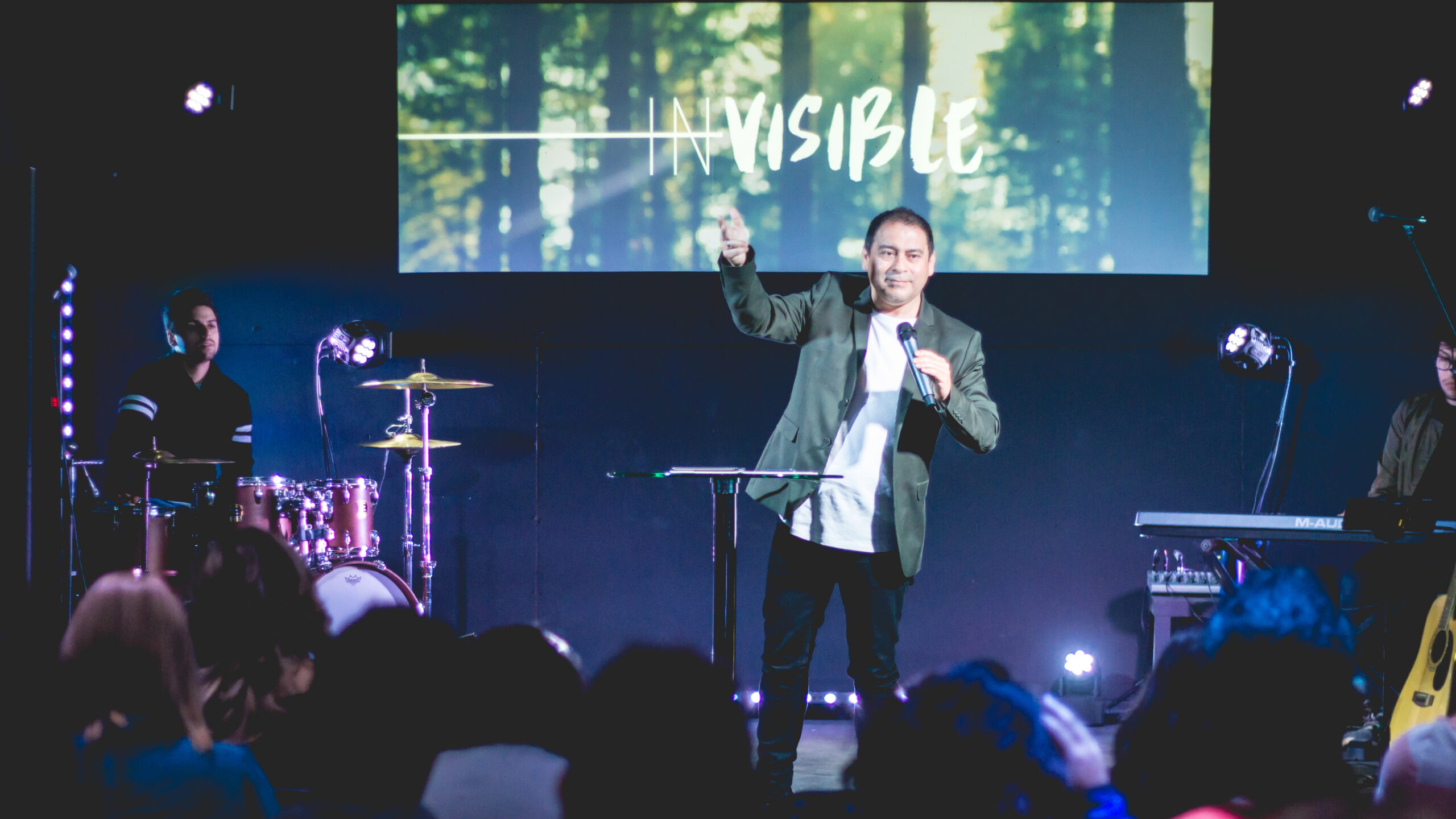
People have more digital content than they could ever consume. They can stream a concert, watch a service, attend a webinar, listen to a podcast, scroll through short-form videos, and ask artificial intelligence to summarize almost anything.
And yet, people are still choosing to show up in person.
The global events industry is projected to reach $2.5 trillion by 2035, (Allied Market Research). The same report estimates a 6.8% compound annual growth rate from 2024 to 2035, pointing to continued demand for conferences, concerts, festivals, sporting events, exhibitions, and other in-person gatherings.
That momentum is not limited to one category. Bizzabo’s State of Events and Industry Benchmarks report found that 72% of attendees say in-person conferences provide the best networking opportunities, and 71% believe in-person B2B conferences are the most effective way to learn about new products or services. Bank of America Institute also reported that consumer demand for live entertainment, especially sports, has surged above pre-pandemic levels, with attendance and spending up 25% from 2019.
The trend is clear: even in a digital-first world, people still value being physically present with other people.
For churches, this is more than an interesting cultural observation. It is an opportunity to think more intentionally about the Sunday morning experience, church hospitality, guest follow-up, and the systems that help people move from attendance to belonging.
In-Person Connection Still Matters
Church leaders do not need the events industry to prove that gathering matters. Scripture, discipleship, worship, prayer, community, service, and pastoral care have always carried a deeply embodied element.
Still, the broader cultural trend is worth noticing. People may be digitally connected, but many are relationally hungry. They are looking for places where they can be known, welcomed, and connected to something meaningful.
Pew Research Center’s 2023–24 Religious Landscape Study found that about one-third of U.S. adults attend in-person religious services at least monthly, while 23% watch religious services virtually at least monthly. Online ministry continues to serve an important role, especially for people who are traveling, homebound, exploring faith, or reconnecting from a distance. But in-person gatherings still carry a unique opportunity for relationship, care, and discipleship.
Barna has also reported renewed church attendance among younger adults, noting that Gen Z and Millennials are now among the most regular churchgoers, with Gen Z churchgoers averaging 1.9 weekends per month and Millennials averaging 1.8 weekends per month. That does not mean every church is seeing the same pattern, but it does suggest that physical presence still has meaningful pull, even among generations often described as digital natives.
The question for churches is not simply, “Will people show up?”
A better question is, “When people show up, are we ready to receive them well?”
Church Hospitality Is More Than A Friendly Greeting
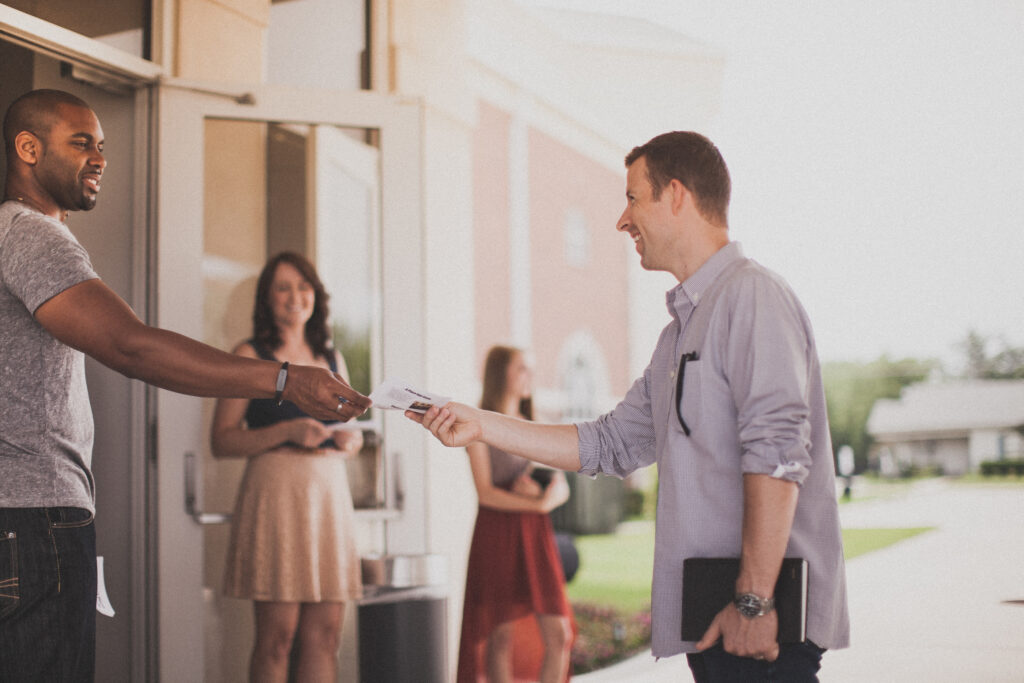
Most churches care deeply about hospitality. They want guests to feel welcomed. They want families to find classrooms, parents to feel confident about check-in, volunteers to be prepared, and newcomers to understand what step to take next.
But good intentions do not always create a clear experience.
Unsurprisingly, Lifeway Research has reported that more than 99% of Protestant churches use at least one method to welcome visitors, such as welcome centers, greeters, connection cards, or follow-up practices. While that is encouraging and shows that hospitality is already on the radar for nearly every church. It’s important to see that first impressions are just one aspect of the worship experience.
The challenge is that hospitality is not one moment. It is a full pathway.
A guest’s experience begins before they walk through the door. They may visit the church website, check service times, look for Kids’ Ministry details, scan social media, or ask a friend what to expect. Once they arrive, they are noticing the parking lot, signage, entrances, lobby, check-in process, seating, worship environment, Children’s Ministry, and whether anyone helps them feel seen without making them feel singled out.
After they leave, the experience continues. Did anyone follow up? Was the communication personal? Were next steps clear? Does the church have a way to know whether that guest comes back? Could staff or volunteers help that person move toward a group, serving opportunity, baptism conversation, membership class, or pastoral care?
This is where church hospitality and church management begin to overlap.
The Sunday Morning Experience Needs Both Warmth & Systems
While we are not abdicating that churches treat Sunday like a performance or reduce people to attendance numbers, we are saying that churches can honor people by prayerfully and intentionally preparing the worship experience to meet people where they’re at.
A warm welcome matters. So does knowing whether the check-in line is too long.
A friendly volunteer matters. So does making sure that church volunteer has been trained, scheduled, and reminded.
A meaningful conversation in the lobby matters. So does having a reliable process for guest follow-up after that conversation happens.
The rise of live experiences reminds church leaders that physical spaces shape how people engage. For churches, the goal is not to create a premium consumer experience. The goal is to remove unnecessary confusion so people can more easily encounter community, worship, and discipleship.
That may include practical questions like:
- Is it clear where a first-time guest should go?
- Can parents check in their children without feeling rushed or confused?
- Do volunteers know how to answer common questions?
- Is there a follow-up process for guests within the first few days?
- Can ministry leaders see who is new, who is returning, and who may be falling through the cracks?
- Are events, groups, serving opportunities, and next steps easy to find?
These questions are not only operational. They are pastoral. When churches organize information well, they are better equipped to care for people well.
Digital Tools Should Support Real-World Discipleship
One of the easiest mistakes churches can make is separating digital ministry from in-person ministry. The stronger approach is to let each support the other.
A church website can help someone decide to visit. Online registration can make an event easier to attend. A mobile app can help members stay connected during the week. Church management software can help staff understand attendance patterns, follow-up needs, serving involvement, group participation, and giving engagement.
The point is not to replace relationships with technology. The point is to use technology to support relationships.
When someone visits for the first time, the right system can help make sure follow-up happens. When a family misses several weeks, attendance data can help a ministry leader notice and reach out. When a volunteer serves faithfully, scheduling tools can help prevent burnout. When someone is ready for a next step, clear communication can help them move forward.
In-person ministry is strengthened when churches have healthy systems behind the scenes.

A Practical Opportunity For Church Leaders
The growth of live experiences should encourage churches, not pressure them. People are still willing to gather. They are still looking for connection. Many are still open to showing up in person when they believe the gathering matters.
For churches, the opportunity is to prepare with care.
That does not require turning Sunday morning into a production. It does require paying attention to the full experience people have when they interact with your church. From the first website visit to the first handshake, from kids check-in to guest follow-up, from attendance tracking to next-step conversations, every detail can help communicate, “You are seen, and there is a place for you here.”
Church hospitality is not about impressing people. It is about serving people.
And in a culture where people are still choosing to show up, churches have a meaningful opportunity to welcome them well and help them take their next step toward Christ-centered community.
Make Sure Your ChMS Supports Your Ministry Goals
As your church evaluates the way people experience Sunday morning, it may also be worth reflecting on the tools supporting that experience behind the scenes. Your church management software should help your team welcome guests, follow up with care, understand engagement, and support real discipleship throughout the week.
Take the free Church Management Software Assessment to spend five minutes honestly evaluating what you think of your current ChMS, then share it with your team to see where you are aligned and where there may be room to grow. A little healthy reflection today can help you make sure your ministry has the right tools to care for people well tomorrow.
Take The ChMS Alignment Assessment